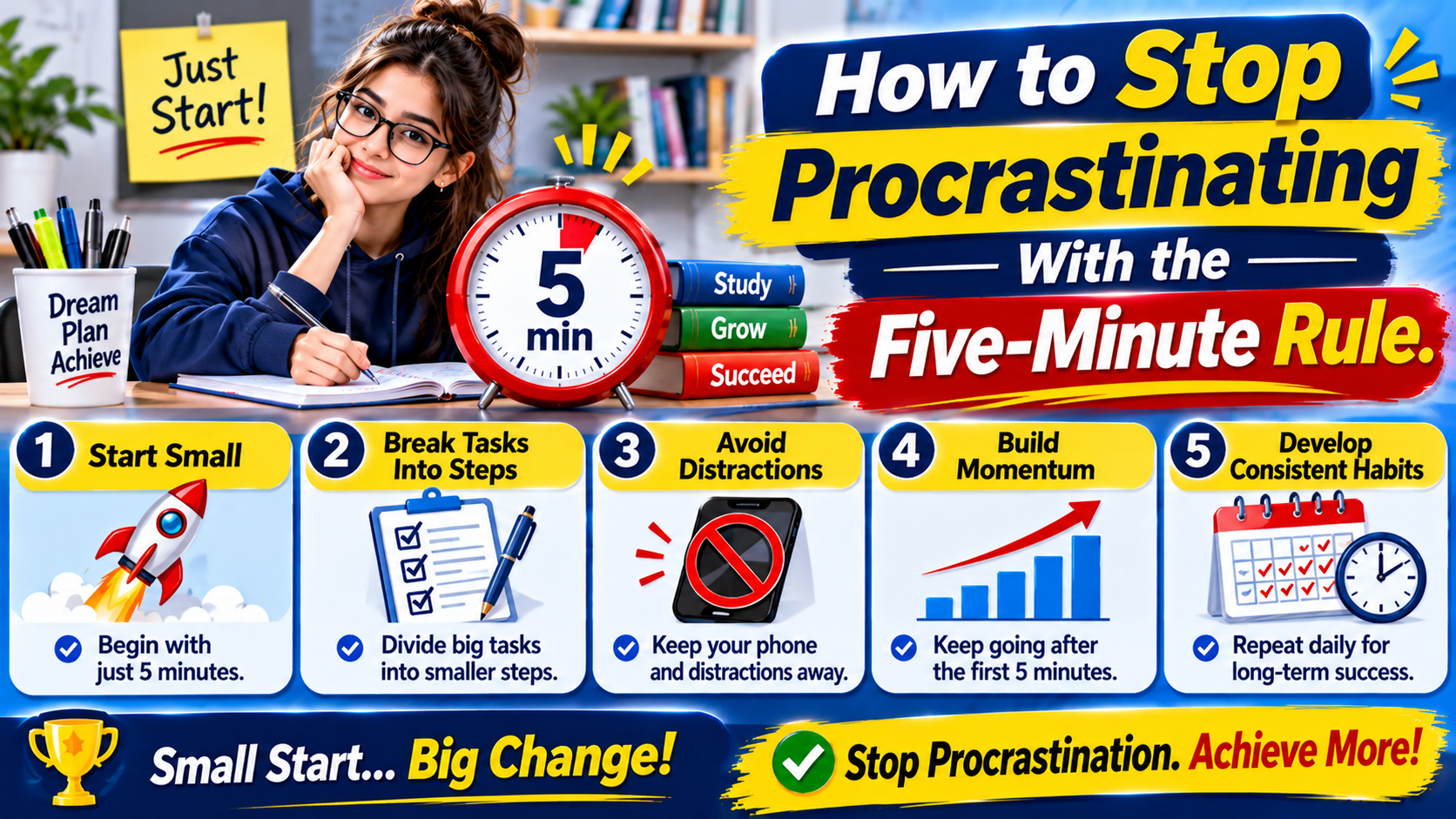
To learn how to stop procrastinating, you must lower the effort needed to begin your first task. Set a timer for five minutes, open one single page, and write one sentence. Action creates motivation, so once those five minutes pass, staying on task becomes natural.
How to Stop Procrastinating With the Five-Minute Rule
The hardest part of studying is the first minute. Your brain treats a three-hour study session as a threat because the task feels too heavy. When you tell yourself that you only need to work for five minutes, your brain drops its defense. Anyone can read one paragraph or write two lines for three hundred seconds.
Use a kitchen timer or the stopwatch on your phone. Put the timer where you can see the numbers run down. Sit down, start the clock, and do the work until the chime rings. If you want to stop at the five-minute mark, you have full permission to walk away. Nine times out of ten, you will choose to keep going because the friction is gone.
Build a Low-Friction Study Setup
Procrastination often happens before you even sit at your desk. If your desk is messy, your books are across the room, and your computer needs updates, you will choose your phone instead. Setting up your workspace ahead of time removes these tiny barriers.
Take ten minutes each night to prepare the exact tools you need for the morning session. This simple habit keeps your focus high and stops hesitation before it begins.
- Clear every piece of trash, mug, and random paper off the desk surface.
- Open your textbook to the exact chapter and page you need to read.
- Place one black pen and one yellow highlighter directly on the notebook.
- Turn your phone off completely and slide it inside a drawer in another room.
- Write your single main goal on a small sticky note and stick it to your screen.
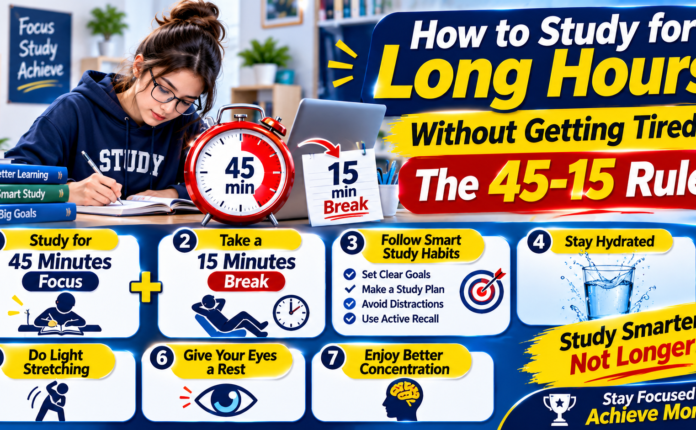
The 45-15 Study Block Schedule
Long, open-ended study days make putting things off very easy. When you have six hours ahead of you, wasting thirty minutes scrolling seems harmless. Structured blocks create an urgent deadline that pushes you to work faster and protect your energy.
Instead of endless study marathons, use structured periods inspired by proven study skills. Work hard for forty-five minutes, then rest for fifteen minutes. During the break, stand up, drink a full glass of water, and look out a window to rest your eyes. Do not open social media during the short break, because screen time steals your mental rest.
Break Large Chapters Into Micro Tasks
A huge project like reviewing five biology chapters invites delays. Your brain cannot process where to start, so it chooses an easy escape. You must cut large materials into small pieces that take ten to fifteen minutes each.
Grab a blank sheet of paper and turn your syllabus into tiny checkmarks. Each line must be a real action, not a topic title.
- Read pages 42 through 46 and highlight three core definitions.
- Draw the cell structure diagram from memory on scrap paper.
- Answer practice questions one through four at the end of the section.
- Write three summary flashcards for tomorrow using basic spaced repetition steps.
- Check your answers against the back of the book and mark errors.
What to Do When You Hit a Wall
Even with a great plan, your energy might crash around two in the afternoon. When you feel the urge to wander away from your desk, do not fight it with pure willpower. Willpower runs out quickly when your body is tired or hungry.
Switch your study format right away. If you were reading dense text, switch to answering five quick flashcards while standing up. If you were writing an essay draft, stop and read your notes out loud for eight minutes. A sudden change in physical posture and task type resets your attention and keeps your schedule moving.