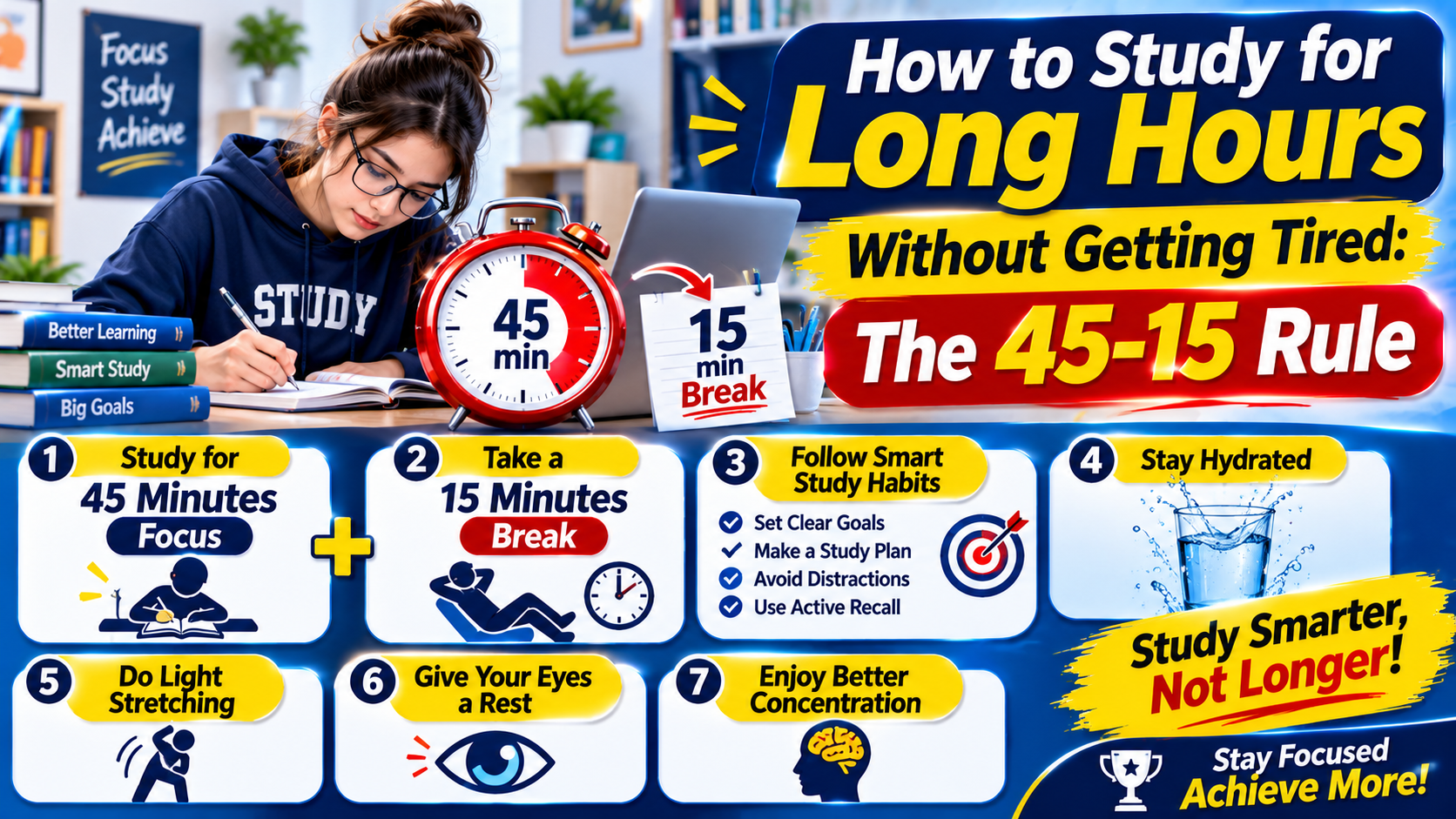
You can learn how to study for long hours without getting tired by switching tasks before your brain slows down. Work in sixty-minute cycles that pair forty-five minutes of deep effort with fifteen minutes of physical movement. This exact pattern keeps your blood moving, protects your eyes, and stops mental fatigue before it starts.
How to study for long hours without getting tired
Tiredness during revision rarely comes from a lack of sleep. It comes from staying in one position and staring at the same page for too long. When your eyes stay locked on one distance, your optic nerve sends fatigue signals directly to your brain. You feel sleepy even when you drank coffee an hour ago.
To break this loop, you need structured study skills that manage your physical energy instead of just your time. Plan your entire day into three distinct sessions separated by real meals. Never try to push past the four-hour mark in a single sitting without an extended reset.

The 45-15 energy cycle
The core of this method is the forty-five minute block. Set a basic kitchen timer across the room for forty-five minutes. Sit down with only one task, one notebook, and one pen. When the timer sounds, stop writing immediately, even if you are in the middle of a sentence.
- Minute 0 to 45: Work on high-effort material like practice questions or writing essay outlines without checking any screens.
- Minute 45 to 48: Stand up immediately, walk away from your desk, and drink a full glass of cold water.
- Minute 48 to 55: Do light stretching, walk around your home, or do quick chores like washing dishes to reset your focus.
- Minute 55 to 60: Sit back down at your desk, review what you will do next, and set your timer for the next cycle.
Rotate three study modes across the day
Studying the same subject in the same way makes your brain numb. You can stay sharp for six or eight hours if you change the type of mental work you do every two hours. Alternate between high-focus tasks, creative sorting, and memory testing.
- Morning Block (9:00 AM to 11:30 AM): Solve difficult practice problems and write out answers under timed conditions while your willpower is fresh.
- Midday Block (1:00 PM to 3:30 PM): Use spaced repetition cards, draw summary mind maps, or organize your notes into flashcards.
- Late Block (4:30 PM to 6:30 PM): Read textbook chapters out loud, explain concepts to an empty room, or do light review of old mistakes.
The physical rules that prevent afternoon brain fog
What you put into your body during breaks determines if you crash at two in the afternoon. Heavy carb meals pull your blood away from your head to digest food, which brings on heavy eyelids. Eat light proteins, fruits, and nuts during study days, and save your large meal for the end of the evening.
Keep your desk cool and bright. Dim yellow lighting makes your brain prepare for sleep, while bright white daylight bulbs keep you alert. Open a window every two hours for five minutes to flush out carbon dioxide, which is a hidden cause of daytime headaches and sluggish thoughts.
How to end your study day cleanly
A major reason students feel drained is that their study day never truly stops. If you leave your books open on your desk, your brain stays partly stressed all night. When you finish your final block, close every book, pack your bag, and clear your workspace completely.
Write down your starting task for tomorrow on a single sticky note and put it on your laptop lid. Once that note is down, walk away from your study area and do not return until the next morning. Clean cutoffs give your mind the rest it needs to repeat the process tomorrow.